Pigmentation
5 min read
Can LED Masks Make Melasma Worse? What Pigment-Prone Skin Should Know
Can LED Masks Make Melasma Worse? What Pigment-Prone Skin Should Know
At-home LED masks can be useful for some skin goals, but melasma-prone skin needs a more careful conversation about heat, visible light, and pigment triggers.
THE BIG TAKEAWAY
LED masks are not automatically bad, but they are not automatically right for everyone.
If you are melasma-prone, heat and visible light matter. A device that seems harmless for one person may trigger pigment, irritation, or worsening dark patches in another.
When melasma is active, start with the boring plan that works: tinted broad-spectrum sunscreen with iron oxides, shade, fewer irritants, pigment-safe ingredients, and a thoughtful dermatologist-guided approach.
For melasma, the goal is not more skincare technology. It is calmer, more consistent, better-protected skin.
LED masks are not automatically bad, but they are not automatically right for everyone.
If you are melasma-prone, heat and visible light matter. A device that seems harmless for one person may trigger pigment, irritation, or worsening dark patches in another.
When melasma is active, start with the boring plan that works: tinted broad-spectrum sunscreen with iron oxides, shade, fewer irritants, pigment-safe ingredients, and a thoughtful dermatologist-guided approach.
For melasma, the goal is not more skincare technology. It is calmer, more consistent, better-protected skin.
Pigmentation
5 min read
Can LED Masks Make Melasma Worse? What Pigment-Prone Skin Should Know
At-home LED masks can be useful for some skin goals, but melasma-prone skin needs a more careful conversation about heat, visible light, and pigment triggers.
SHARE
SHARE
SAVE
SAVE
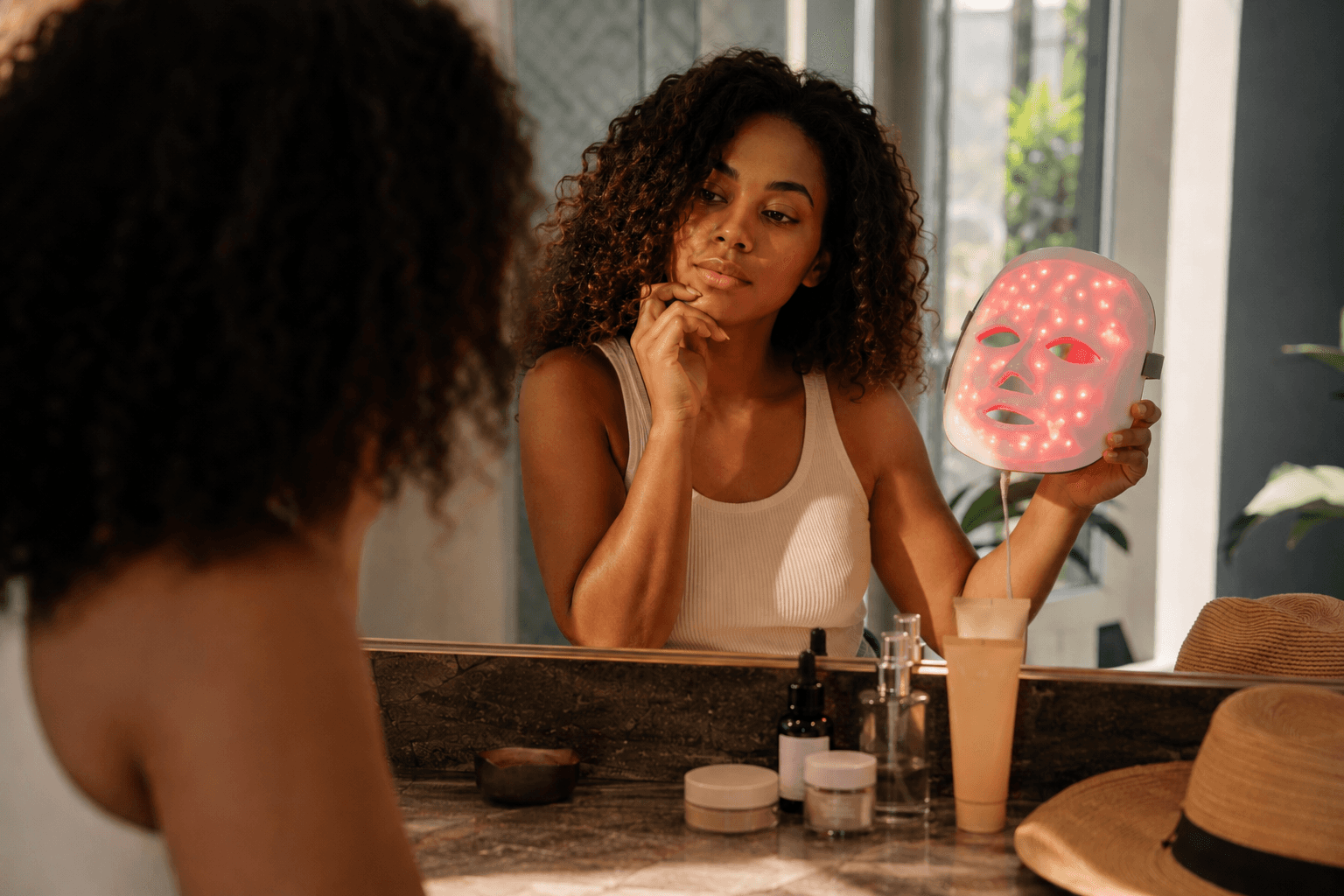
LED masks have become the skincare equivalent of a countertop espresso machine: sleek, expensive, and very good at making you feel like you're doing something. For some people, they may be a reasonable add-on, marketed for acne, redness, collagen support, and general skin maintenance. But if you're melasma-prone, the conversation needs to be more careful. "More skincare technology" is not automatically better skin care.
Why LED masks are having a moment
At-home LED masks use different wavelengths of light — most commonly red, near-infrared, and sometimes blue — for inflammation, acne, fine lines, and texture. At-home devices differ from clinical ones in wavelength, energy output, heat generation, and quality. They also depend heavily on patient selection. A device may be low-risk for one person and a poor fit for another.
Melasma is not just a dark spot
Melasma is a chronic pigment condition appearing as brown or gray-brown patches on the cheeks, forehead, upper lip, nose, or jawline. It's influenced by hormones, sun exposure, heat, genetics, and inflammation — and it's stubborn. Unlike a single post-acne mark, melasma behaves like a chronic condition with flares and remissions. It can improve beautifully, then worsen after a sunny vacation, hot yoga streak, or aggressive procedure. The plan has to respect its triggers.
Why heat matters
Most people know UV exposure can worsen pigment. Fewer realize heat is also a trigger. Saunas, steam rooms, hot yoga, overheated procedures — and just living through a hot summer like we have here in Texas — can make melasma more reactive. LED masks may generate warmth against the skin. That doesn't mean every mask is dangerous or every patient will flare, but if your pigment reliably worsens with heat, it's worth pausing before adding a warm device to your face several nights a week.
What about blue light and visible light?
Visible light, including blue light, can contribute to hyperpigmentation in some patients — particularly those with medium-to-deeper skin tones. This is why tinted sunscreens with iron oxides are often recommended for melasma; they protect against visible light in a way untinted sunscreens don't. Blue LED light is used in acne devices for its antibacterial effects, but if you're pigment-prone, it's not something to casually add without understanding the tradeoffs.
Who should be cautious?
Be more careful if you have: a personal history of melasma, pigment that worsens with heat, medium-to-deeper skin tone, dark patches that flare in summer, hormone-related melasma, recent barrier damage, a photosensitive condition, or medications that increase light sensitivity. This doesn't mean you can never use an LED mask — it means it's not a harmless toy just because it's sold for home use.
The "dark spot" trap
Not all pigmentation is the same. Post-acne marks, freckles, sun spots, and melasma are distinct conditions. Treating every pigment problem with the same device or peel can make some conditions worse. Melasma in particular is famous for punishing overenthusiasm.
What to do instead if melasma is active
When melasma is active, think calming and controlling — not adding stimulation. Start with daily broad-spectrum tinted mineral sunscreen with iron oxides, and reapply outdoors. Add hats and shade. Simplify your routine — too many actives cause irritation, and irritation worsens pigment. Pigment-safe ingredients like azelaic acid, vitamin C, and niacinamide can help, but the right plan depends on your skin. If pigment persists, see a dermatologist. Prescription creams, careful chemical peels, and low-heat laser strategies may help, but melasma needs a conservative, thoughtful approach.
When to stop a device
If you notice new brown patches, worsening melasma, increased heat sensitivity, or irritation in treated areas — stop and reassess. Don't keep going because the instructions say consistency is key. Consistency only helps when the treatment is right for your skin.
The bottom line
LED masks aren't automatically bad, but melasma-prone skin is reactive skin, and heat plus visible light deserve respect. If pigment is your main concern, the best first move often isn't the newest device. It's the boring plan that works: tinted sunscreen, shade, fewer irritants, pigment-safe topicals, and a dermatologist who knows when to treat and when to back off.
If dark patches are persistent, worsening, recurrent, or spreading, see a board-certified dermatologist before adding more devices or treatments.
LED masks have become the skincare equivalent of a countertop espresso machine: sleek, expensive, and very good at making you feel like you're doing something. For some people, they may be a reasonable add-on, marketed for acne, redness, collagen support, and general skin maintenance. But if you're melasma-prone, the conversation needs to be more careful. "More skincare technology" is not automatically better skin care.
Why LED masks are having a moment
At-home LED masks use different wavelengths of light — most commonly red, near-infrared, and sometimes blue — for inflammation, acne, fine lines, and texture. At-home devices differ from clinical ones in wavelength, energy output, heat generation, and quality. They also depend heavily on patient selection. A device may be low-risk for one person and a poor fit for another.
Melasma is not just a dark spot
Melasma is a chronic pigment condition appearing as brown or gray-brown patches on the cheeks, forehead, upper lip, nose, or jawline. It's influenced by hormones, sun exposure, heat, genetics, and inflammation — and it's stubborn. Unlike a single post-acne mark, melasma behaves like a chronic condition with flares and remissions. It can improve beautifully, then worsen after a sunny vacation, hot yoga streak, or aggressive procedure. The plan has to respect its triggers.
Why heat matters
Most people know UV exposure can worsen pigment. Fewer realize heat is also a trigger. Saunas, steam rooms, hot yoga, overheated procedures — and just living through a hot summer like we have here in Texas — can make melasma more reactive. LED masks may generate warmth against the skin. That doesn't mean every mask is dangerous or every patient will flare, but if your pigment reliably worsens with heat, it's worth pausing before adding a warm device to your face several nights a week.
What about blue light and visible light?
Visible light, including blue light, can contribute to hyperpigmentation in some patients — particularly those with medium-to-deeper skin tones. This is why tinted sunscreens with iron oxides are often recommended for melasma; they protect against visible light in a way untinted sunscreens don't. Blue LED light is used in acne devices for its antibacterial effects, but if you're pigment-prone, it's not something to casually add without understanding the tradeoffs.
Who should be cautious?
Be more careful if you have: a personal history of melasma, pigment that worsens with heat, medium-to-deeper skin tone, dark patches that flare in summer, hormone-related melasma, recent barrier damage, a photosensitive condition, or medications that increase light sensitivity. This doesn't mean you can never use an LED mask — it means it's not a harmless toy just because it's sold for home use.
The "dark spot" trap
Not all pigmentation is the same. Post-acne marks, freckles, sun spots, and melasma are distinct conditions. Treating every pigment problem with the same device or peel can make some conditions worse. Melasma in particular is famous for punishing overenthusiasm.
What to do instead if melasma is active
When melasma is active, think calming and controlling — not adding stimulation. Start with daily broad-spectrum tinted mineral sunscreen with iron oxides, and reapply outdoors. Add hats and shade. Simplify your routine — too many actives cause irritation, and irritation worsens pigment. Pigment-safe ingredients like azelaic acid, vitamin C, and niacinamide can help, but the right plan depends on your skin. If pigment persists, see a dermatologist. Prescription creams, careful chemical peels, and low-heat laser strategies may help, but melasma needs a conservative, thoughtful approach.
When to stop a device
If you notice new brown patches, worsening melasma, increased heat sensitivity, or irritation in treated areas — stop and reassess. Don't keep going because the instructions say consistency is key. Consistency only helps when the treatment is right for your skin.
The bottom line
LED masks aren't automatically bad, but melasma-prone skin is reactive skin, and heat plus visible light deserve respect. If pigment is your main concern, the best first move often isn't the newest device. It's the boring plan that works: tinted sunscreen, shade, fewer irritants, pigment-safe topicals, and a dermatologist who knows when to treat and when to back off.
If dark patches are persistent, worsening, recurrent, or spreading, see a board-certified dermatologist before adding more devices or treatments.
SHOP MY SHELF
SHOP MY SHELF
SHOP MY SHELF

Saie Glowy Super Skin Tint Foundation
This lightweight skin tint blends skincare and makeup with buildable coverage, helping hydrate, brighten, and leave skin with a luminous finish.
Manucurist Complete Serum Nail Strengthener
This nail and cuticle serum hydrates, strengthens, and revitalizes with chestnut extract, panthenol, and plant-based glycerin for healthier-looking nails.

AlphaRet Overnight Cream
This overnight cream combines a retinoid and alpha hydroxy acid to smooth fine lines, refine texture, and support brighter, renewed skin.

Prequel Retinal Renew Retinaldehyde Gel
This retinaldehyde gel supports visible skin renewal with 0.1% retinal, helping smooth fine lines, refine texture, and promote a more even complexion.
Vetted Dermlab B Balm
VETTED B Balm is a fragrance-free, sensitive-skin-safe formula that soothes, repairs, and restores dry, irritated skin and lips with barrier-supporting lipids and calming actives.
Saie Glowy Super Skin Tint Foundation
This lightweight skin tint blends skincare and makeup with buildable coverage, helping hydrate, brighten, and leave skin with a luminous finish.
Prequel Retinal Renew Retinaldehyde Gel
This retinaldehyde gel supports visible skin renewal with 0.1% retinal, helping smooth fine lines, refine texture, and promote a more even complexion.
Saie Glowy Super Skin Tint Foundation
This lightweight skin tint blends skincare and makeup with buildable coverage, helping hydrate, brighten, and leave skin with a luminous finish.
Manucurist Complete Serum Nail Strengthener
This nail and cuticle serum hydrates, strengthens, and revitalizes with chestnut extract, panthenol, and plant-based glycerin for healthier-looking nails.
AlphaRet Overnight Cream
This overnight cream combines a retinoid and alpha hydroxy acid to smooth fine lines, refine texture, and support brighter, renewed skin.

Carina Woodruff, MD
Carina Woodruff, MD
Founder and Board-Certified Dermatologist
Founder and Board-Certified Dermatologist
Board-certified dermatologist helping patients achieve healthy, confident skin with evidence-based care, thoughtful guidance, and realistic routines.
Board-certified dermatologist helping patients achieve healthy, confident skin with evidence-based care, thoughtful guidance, and realistic routines.